Introduction
While Move powers smart contracts on IOTA, the network's validator and node infrastructure is primarily implemented in Rust.
Rust is the programming language behind much of the software that allows IOTA nodes to communicate, process transactions, maintain the ledger, execute Move applications, and participate in consensus.
The Starfish protocol operates within this infrastructure. It is not a programming language and does not replace Rust. Starfish is a consensus design that determines how validators agree on the order of transactions and keep the network moving during delays or temporary disruptions.
Together, Rust and Starfish form an important part of IOTA's technical foundation.
Why IOTA Uses Rust
Rust is a systems programming language designed for performance, reliability, and memory safety.
These qualities make it suitable for blockchain node software, where errors can affect transaction processing, network availability, and the integrity of the ledger.
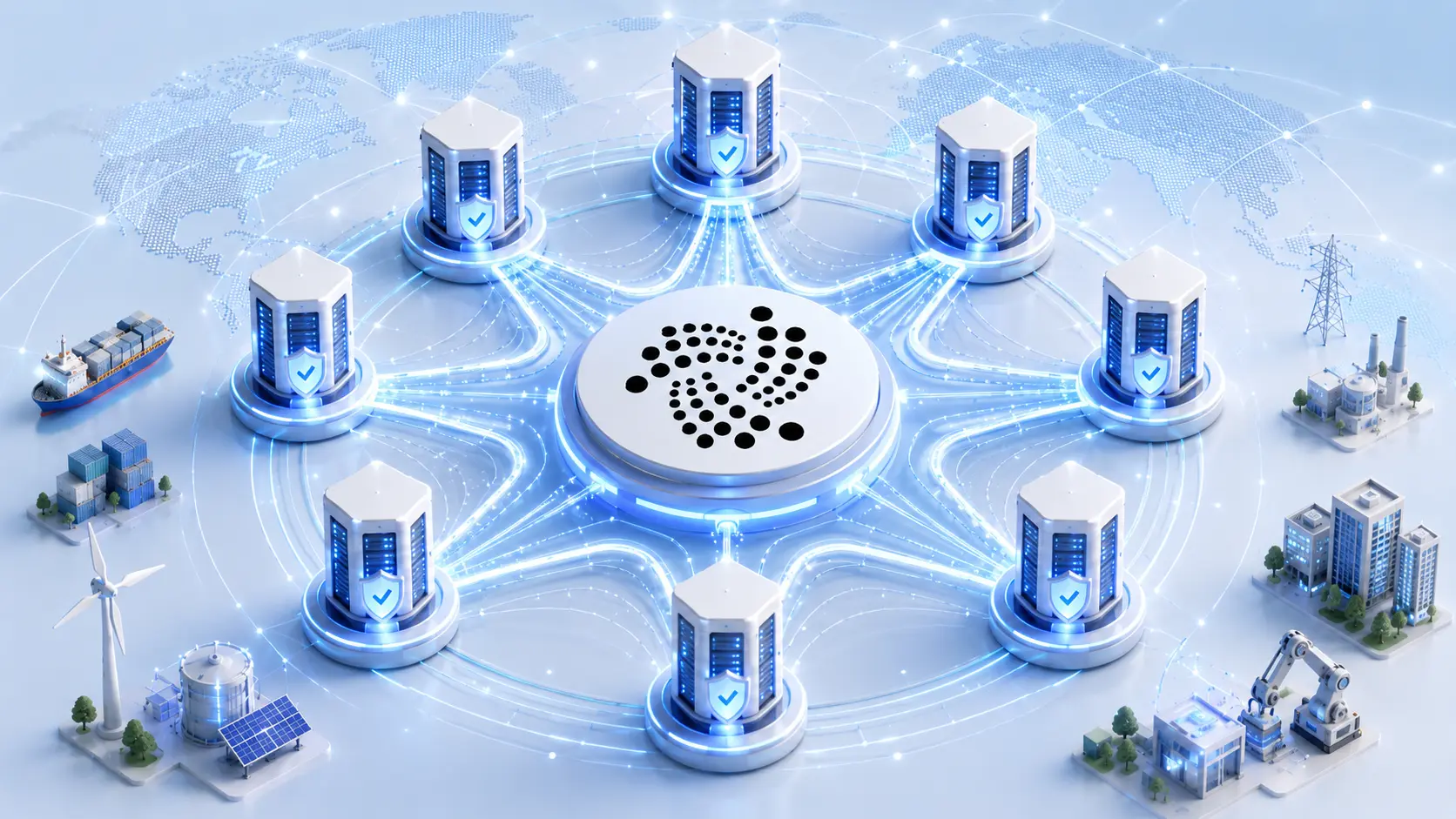
Validator software must perform many demanding tasks simultaneously. It receives data from other nodes, checks transactions, manages network connections, updates the ledger state, executes application logic, and participates in consensus.
Rust provides low-level performance without requiring developers to sacrifice many modern safety features.
What Does an IOTA Validator Do?
Verifying Transactions
Validators check whether transactions follow the rules of the IOTA protocol.
This includes verifying digital signatures, checking whether objects are valid, confirming ownership, and ensuring that a transaction does not attempt to use the same asset incorrectly.
Executing Move Smart Contracts
When a transaction calls a Move smart contract, validators execute that logic through the Move Virtual Machine.
Move defines what the application should do. The Rust-based node software provides the infrastructure required to process and execute those instructions.
Maintaining the Ledger
Validators help maintain a consistent view of the network state.
They track which digital objects exist, who owns them, and how they have changed after transactions are completed.
Participating in Consensus
Validators must also agree on the ordering and finality of transactions.
Without consensus, different nodes could develop conflicting versions of the ledger. A reliable consensus mechanism ensures that participants eventually accept one consistent transaction history.
What Is Starfish Consensus?
Starfish is IOTA's consensus upgrade for improving network reliability under imperfect operating conditions.
Distributed networks cannot assume that every validator will always receive every message at the same time. Nodes may experience latency, unstable connections, temporary outages, or uneven performance.
A consensus system must continue functioning despite these problems.
Starfish is designed to let the network keep progressing even when some validators temporarily fall behind.
How Starfish Improves Network Resilience
Progress Without Perfect Synchronization
Earlier DAG-based consensus designs could depend more heavily on validators receiving missing data before continuing certain operations.
Starfish reduces this dependency.
Instead of forcing the wider network to wait until every validator has caught up, active validators can continue progressing while delayed nodes recover in parallel.
This helps prevent a local connectivity problem from becoming a system-wide slowdown.
An Uncertified DAG
Starfish uses a directed acyclic graph, or DAG, in which validators contribute blocks containing transactions and references to earlier blocks.
The protocol is described as using an uncertified DAG. This means that consensus progress does not require every individual block to collect a separate certificate before it becomes useful within the wider structure.
The goal is to improve how information is distributed and processed without sacrificing Byzantine fault tolerance.
Recovery in Parallel
A delayed validator can retrieve missing information and rejoin the current network state without requiring all other validators to stop.
This supports more predictable performance across geographically distributed networks.
Why This Matters for Global Trade
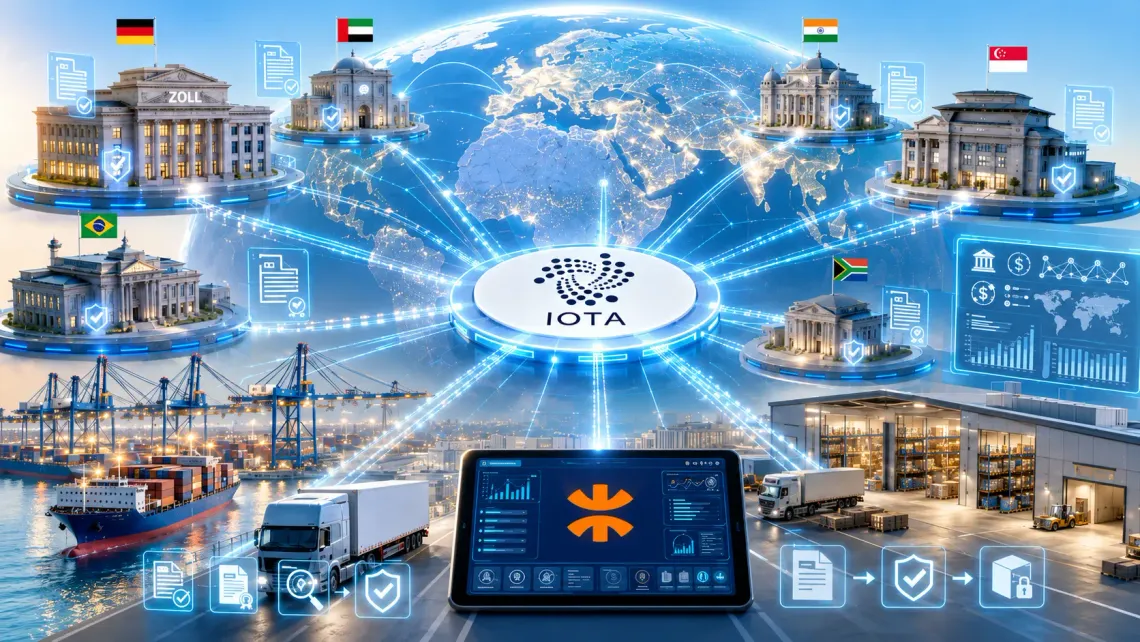
IOTA is increasingly positioned as infrastructure for trade, logistics, digital assets, and regulated applications.
Such systems may involve participants across Africa, Europe, Asia, and other regions with different levels of network performance and technical infrastructure.
A customs transaction, digital certificate, or trade-finance event cannot depend on every validator having a perfect connection at all times.
Starfish helps the IOTA network continue operating through temporary disruptions. Rust provides the high-performance software foundation on which validators and consensus operate.
This combination is particularly relevant for applications such as TWIN, digital customs infrastructure, tokenized trade documents, audit trails, and supply-chain systems.
Rust, Move, and Starfish Have Different Roles
The three technologies should not be confused.
Move is the smart contract language. It defines the rules of digital assets and applications.
Rust is the main implementation language for the node and validator software. It handles networking, transaction processing, ledger operations, and the execution environment.
Starfish is the consensus protocol. It determines how validators coordinate and agree on transaction ordering under real-world network conditions.
Together, they form three complementary layers:
- Move provides programmability.
- Rust provides the node infrastructure.
- Starfish provides resilient consensus.
Conclusion
Rust is a major part of the technical foundation that powers IOTA validators and nodes. It provides the performance and safety needed to operate critical distributed infrastructure.
Starfish builds on that foundation by improving how validators reach consensus during delays, failures, and uneven network conditions.
For IOTA's real-world ambitions, this combination is essential. Move applications can define secure digital assets, but those applications also require a resilient network underneath them.
Rust keeps the infrastructure running. Starfish keeps the validators moving forward together.