Japan is moving toward a new regulatory framework for digital assets. Instead of treating cryptocurrencies mainly as speculative instruments, policymakers are considering rules that would bring selected cryptoassets closer to the standards applied to conventional financial products.
The potential reform could affect taxation, investor protection, market supervision, and institutional participation. It may also influence how Japanese companies use blockchain technology in manufacturing, logistics, finance, and digital infrastructure.
For networks such as IOTA and platforms such as TWIN, the most important development is not simply a lower tax rate. The broader opportunity lies in the growing acceptance of regulated digital assets and blockchain-based industrial systems.
Japan's Changing Approach to Digital Assets
Japan has maintained one of the world's most structured crypto markets for years. Exchanges must comply with strict registration requirements, while custody providers and trading platforms operate under extensive consumer-protection rules.
The next stage could integrate cryptoassets more closely into the country's existing financial legislation. This would not automatically make every cryptocurrency equivalent to a stock. However, it could place selected assets under a clearer and more familiar regulatory structure.
Such a change would give professional investors greater certainty regarding disclosure obligations, market conduct, custody, and risk management.
Why Regulatory Clarity Matters
Large financial institutions rarely enter new markets without defined rules. Banks, pension funds, insurance companies, and asset managers need predictable legal frameworks before they can allocate substantial capital.
Clearer regulation could make it easier for these institutions to assess crypto-related products, develop investment strategies, and cooperate with licensed service providers.
Japan's approach may therefore support gradual adoption rather than short-term speculation. The country could become an example of how digital assets can be incorporated into traditional finance without removing investor protections.
The Importance of Japan’s Planned Tax Changes
Crypto gains in Japan have historically been treated as miscellaneous income for many private investors. Depending on total income, the combined tax burden could become significantly higher than the rate applied to listed shares.
A proposed move toward a separate tax rate of approximately 20 percent for eligible cryptoassets would substantially change the financial incentives.
The reform is often described online as an immediate reduction from 55 percent to 20 percent. That wording is misleading. The highest figure refers to the potential combined burden under the current progressive system, while the lower rate remains connected to planned legislation and implementation conditions.
Even so, a simpler tax structure could make long-term investment, portfolio management, and institutional participation more attractive.
Bitcoin and Ethereum Would Likely Benefit First
Bitcoin and Ethereum would probably receive the most immediate attention from investors. Both assets have deep liquidity, extensive market infrastructure, and broad recognition among financial institutions.
However, the long-term consequences could extend beyond the two largest cryptocurrencies.
Once digital assets become easier to classify, hold, and report, companies may become more willing to explore blockchain applications that solve operational problems. These could include supply-chain verification, digital identity, tokenized assets, machine payments, automated compliance, and industrial data exchange.
That is where utility-focused networks become relevant.
Why Japan Is an Important Market for Industrial Blockchain
Japan has a highly developed manufacturing economy with global influence in automotive production, electronics, robotics, logistics, and precision engineering.
These sectors rely on complex supply chains, extensive documentation, quality assurance, and cooperation between large numbers of suppliers.
Blockchain technology could improve several of these processes by creating verifiable records, automating data exchange, and connecting physical goods with digital identities.
The potential value is therefore not limited to crypto trading. The larger opportunity involves trusted digital infrastructure for real economic activity.
The Possible Role of IOTA
IOTA is designed around digital transactions, data exchange, tokenized assets, and machine-based economic activity.
Its architecture makes it relevant for applications involving connected devices, supply chains, digital product passports, infrastructure networks, and industrial automation.
Japanese companies exploring blockchain-based systems would require more than a tradable token. They would need scalable infrastructure, transparent governance, reliable data, and integration with existing enterprise processes.
IOTA could become relevant in this context if its technology is adopted for practical applications and supported by compliant enterprise solutions.
TWIN and Digital Representations of Physical Assets
TWIN focuses on digital infrastructure for trade, supply chains, real-world assets, and digital twins.
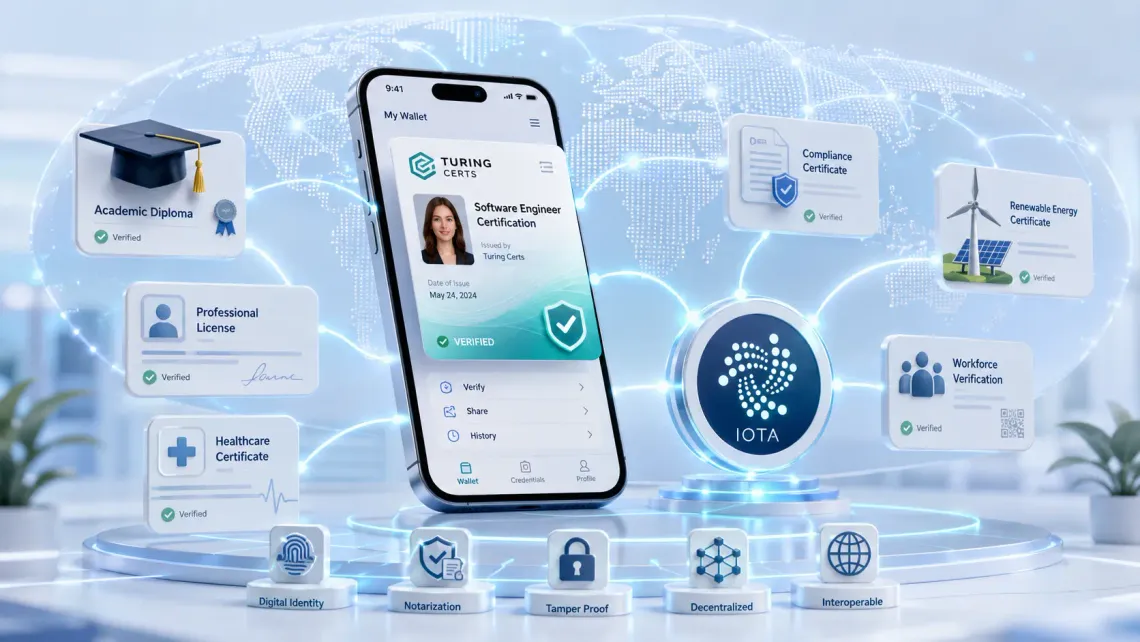
A digital twin can represent a physical product, shipment, machine, certificate, or industrial asset. It can contain information about origin, ownership, condition, maintenance, location, or regulatory status.
For Japanese manufacturers, this could create several practical advantages:
Greater Supply-Chain Transparency
Digital records could make it easier to verify where products and materials originate.
Improved Product Traceability
Companies could follow goods throughout production, transport, sale, and recycling.
Automated Compliance
Digital certificates and standardized data could reduce manual documentation.
Tokenization of Real-World Assets
Physical goods or contractual rights could be represented digitally and connected to financial applications.
These use cases are more closely related to industrial modernization than to conventional cryptocurrency speculation.
Smart Cities, Mobility, and Connected Infrastructure
Japan is also investing heavily in smart cities, mobility systems, robotics, and automated infrastructure.
These environments depend on trusted data from large numbers of connected devices. Vehicles, machines, sensors, public infrastructure, and logistics systems must communicate securely and efficiently.
Distributed ledger technology could help verify machine-generated information and coordinate transactions between independent participants.
IOTA's focus on machine economies and connected infrastructure could make it relevant for such applications, although practical adoption would depend on partnerships, technical integration, and regulatory approval.
The reform should not be interpreted as Japan declaring every cryptoasset to be equivalent to a mainstream stock.
It also does not guarantee that Japanese corporations will immediately adopt IOTA, TWIN, or tokenized industrial assets.
What it does indicate is a broader shift toward regulated digital finance. Japan appears increasingly willing to incorporate cryptoassets into existing financial structures rather than treating the entire sector as an isolated market.
That creates a more favorable environment for serious blockchain projects, especially those that can demonstrate practical value.
What the Development Could Mean for IOTA and TWIN
The possible benefits for IOTA and TWIN are mainly indirect.
A clearer legal framework could:
- increase institutional confidence in digital assets;
- encourage companies to evaluate blockchain infrastructure;
- support tokenization and real-world asset projects;
- improve cooperation between financial and industrial sectors;
- strengthen demand for compliant digital networks.
The decisive factor will be execution. Regulatory recognition alone is not enough. Projects must also deliver reliable technology, enterprise adoption, real-world partnerships, and measurable economic benefits.
Conclusion
Japan's evolving crypto policy could become an important milestone for regulated digital assets.
A more competitive tax structure may encourage investment, while clearer financial rules could make institutional participation easier. At the same time, industrial companies may gain greater confidence in blockchain-based applications for supply chains, tokenized assets, digital identities, and connected infrastructure.
Bitcoin and Ethereum are likely to receive the earliest benefits. However, the more significant long-term opportunity may emerge in the connection between blockchain technology and the physical economy.
For IOTA and TWIN, Japan's reforms could create a more supportive environment for industrial adoption. Whether that opportunity becomes reality will depend on technology, regulation, partnerships, and practical implementation.