Disclaimer
This article presents a speculative scenario, not financial advice or a guaranteed price forecast. TWIN adoption, network activity, token demand, regulation, and market valuation may develop differently than described. Readers should conduct their own research and assess the risks of digital assets independently.
You May Not Be Holding a Worthless Token
What if the market is looking at IOTA from the wrong perspective?
Many traders currently see a low-priced cryptocurrency with limited visible Mainnet activity, modest daily usage, and a long history of delayed expectations. From that viewpoint, IOTA may appear to be another underperforming blockchain waiting for users.
But there is another possible interpretation.
Perhaps IOTA is not merely a speculative token. Perhaps it is becoming the digital fuel required to operate a new trade infrastructure connecting governments, customs agencies, exporters, logistics companies, and financial institutions.
In this scenario, holders are not simply waiting for another crypto cycle. They are accumulating the native resource of a network that could support part of the emerging digital trade economy.
A New Digital Silk Road
The Trade Worldwide Information Network, better known as TWIN, is designed to create open digital infrastructure for international trade. Its development brings together organizations involved in technology, trade facilitation, government policy, and economic development.
Early projects have already demonstrated the digitization of Kenyan flower exports and the tracking of poultry consignments between Poland and the United Kingdom. Meanwhile, Kenya, Morocco, and Nigeria have been selected for initial implementations of ADAPT, an African digital trade initiative underpinned by TWIN.
The metaphor of a new Silk Road is therefore useful.
The caravans of the twenty-first century are containers, trucks, aircraft, and ships. Their cargo is accompanied by digital certificates of origin, customs declarations, bills of lading, product passports, inspection records, and compliance documents.
If these assets and events are recorded or coordinated through IOTA-based infrastructure, the network underneath them must remain secure and operational.
That security does not run on air.
IOTA as the Network's Native Fuel
Gas Fees and Transaction Burns
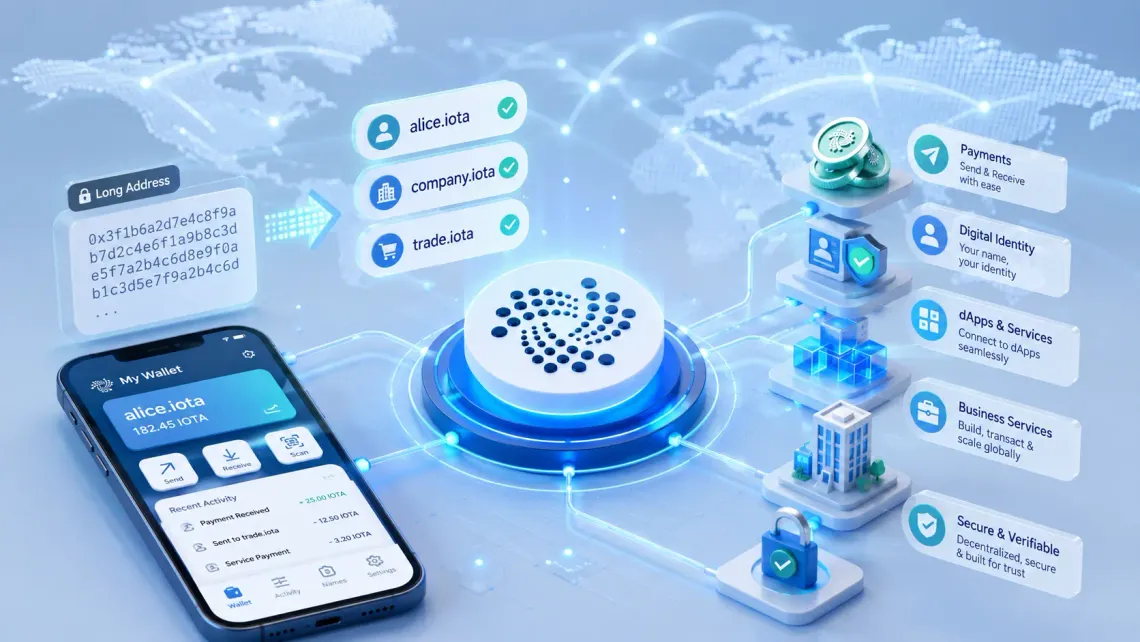
Following IOTA Rebased, transactions consume gas paid in the native IOTA token. A small transaction fee is burned, meaning it is permanently removed from circulation.
Individual fees may remain extremely low. However, the investment thesis is not based on one customs stamp or one product passport. It depends on scale.
A single shipment may generate numerous digital events. Multiply those events across thousands of companies, millions of consignments, and multiple countries, and even very small fees could produce meaningful recurring network demand.
Applications may sponsor transactions so end users never need to purchase IOTA themselves. Nevertheless, the underlying gas must still be paid by an application operator, infrastructure provider, or another participating entity.
The traveler may not personally buy the fuel, but someone must fill the tank.
Staking and Network Security
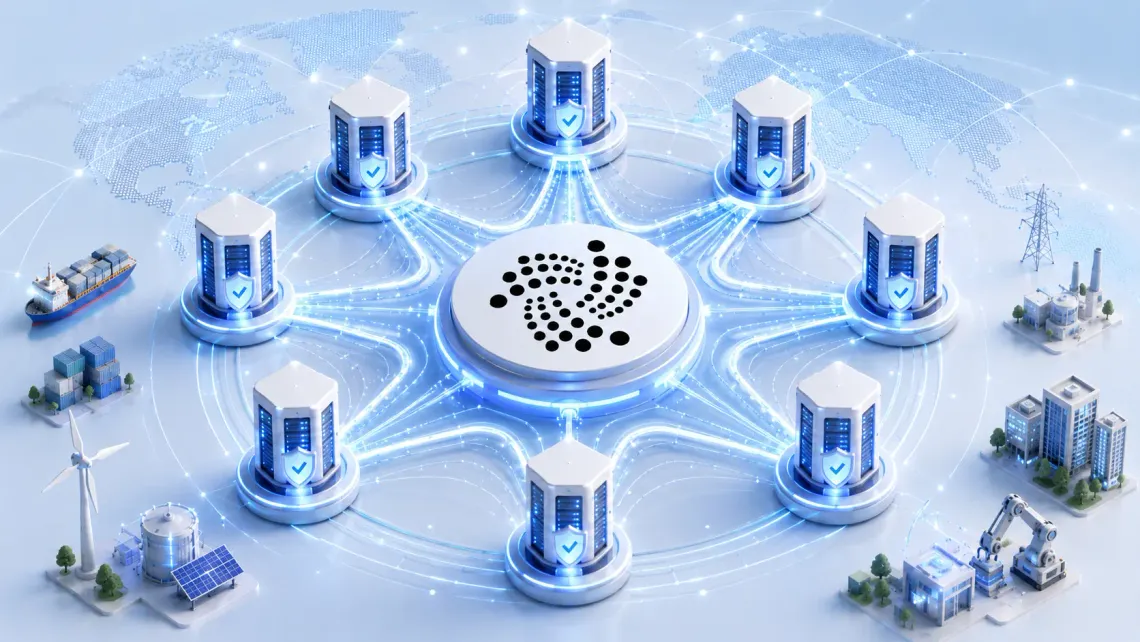
IOTA Rebased is secured through delegated Proof of Stake. Validators operate the network, while token holders can delegate IOTA to support them and participate in protocol rewards.
This makes the token part of the network’s economic security system. The more economic value that depends on IOTA, the more important a robust and broadly distributed validator set becomes.
The “armed escort” protecting the digital caravans is therefore not a separate product. It is the validator network, economically supported by the native token.
Storage Deposits
Onchain objects also require storage resources. IOTA’s model uses storage deposits that remain associated with data stored on the ledger and can be reclaimed when that storage is released.
If trade documents, identities, tokenized assets, product passports, and compliance records remain active for extended periods, part of the token supply may consequently remain committed as storage deposits.
This is not the same as permanently burning tokens. The deposits are potentially recoverable. But while they are required, those tokens are not freely available for other purposes.
The Market May Be Waiting for Proof
Why could a network with institutional relationships and visible trade projects still receive a relatively low market valuation?
One answer is that the market does not price plans. It prices evidence.
Announcements, pilots, partnerships, and implementation frameworks demonstrate potential, but they do not automatically prove large-scale token demand. Traders may therefore continue treating IOTA as an inactive or low-usage network until adoption becomes visible in public network data.
This creates a possible observation-selection problem. Market participants observe today’s low transaction count and conclude that the network has no demand. Yet infrastructure is often built before the traffic arrives. Looking only at current activity may overlook systems that are moving from pilot projects toward production.
However, the opposite mistake is equally dangerous: assuming that every announced implementation will inevitably create massive Mainnet activity.
The decisive evidence will be measurable usage.
Why TWIN Could Change the Token Thesis
The strongest speculative case for IOTA does not depend on being the fastest general-purpose blockchain or winning the attention economy of crypto.
It depends on becoming deeply integrated into a specific sector: digital trade infrastructure.
TWIN does not need to replace every blockchain. It needs to solve practical coordination problems for customs authorities, exporters, importers, logistics companies, and governments better than fragmented paper processes and isolated databases.
If countries begin using TWIN-based systems for real commercial workflows, IOTA could gain a form of demand that differs from temporary crypto speculation. The demand would arise from operating applications, securing infrastructure, maintaining onchain objects, and processing trade-related events.
But TWIN is not yet a global monopoly, and IOTA is not the only technology capable of supporting digital trade. Governments may use several systems, private networks, conventional databases, or competing distributed ledgers.
The opportunity is significant precisely because the outcome is not yet certain.
The Signals That Matter
Rising Mainnet Activity
The first signal is not another partnership announcement. It is sustained growth in transactions and programmable transaction blocks over weeks and months.
A temporary spike may result from testing, incentives, bots, or one application. A structurally higher baseline would be more meaningful.
More Active Addresses and Applications
Transaction growth becomes more credible when accompanied by growth in active addresses, smart-contract interactions, created objects, storage usage, and application activity.
The key question is whether several independent participants are using the network, rather than one service generating most of the traffic.
Expansion Beyond Initial Trade Corridors
Kenya is especially important. If digitization expands from flowers into tea, coffee, minerals, or other export categories, it could demonstrate that the infrastructure is reusable across industries.
The same applies to Morocco and Nigeria. Additional implementations in countries such as Ghana or Egypt would strengthen the case that TWIN can become interoperable continental infrastructure rather than a collection of isolated pilots.
Expansion into Asia
A confirmed production deployment in a major Asian trade corridor could represent another turning point. Markets such as India, Vietnam, South Korea, Singapore, or Indonesia would connect TWIN’s African and European activities to some of the world’s largest manufacturing and logistics networks.
The important distinction is between exploratory discussions, pilots, signed agreements, and full production usage.
Observable Token Demand
Ultimately, adoption must affect the native asset for the token thesis to succeed.
Investors should watch staking participation, validator economics, gas consumption, fee burns, storage deposits, application sponsorship, liquidity, and changes in the circulating supply. Network success does not automatically guarantee token appreciation unless that success creates recurring demand for IOTA.
Three Possible Scenarios
The Bullish Scenario
TWIN expands across multiple countries and trade categories. Mainnet usage rises steadily, businesses sponsor large numbers of transactions, storage deposits grow, and more tokens are delegated to validators.
In this scenario, the market may eventually revalue IOTA from a struggling crypto asset to the native economic resource of a functioning trade network.
The Gradual Scenario
TWIN succeeds, but adoption proceeds slowly. Governments introduce systems in stages, many processes remain offchain, and transaction costs stay so low that token demand grows only moderately.
IOTA becomes useful infrastructure, but its token value develops more slowly than optimistic holders expect.
The Bearish Scenario
Pilots fail to become large production systems, participating countries choose alternative technologies, or applications use IOTA without generating meaningful native-token demand.
In that scenario, strong partnerships and compelling narratives would not be enough to support the investment thesis.
You Own the Fuel Station but the Road Must Still Become Busy
The most compelling IOTA scenario is not that every announcement immediately makes the token valuable. It is that a largely empty road may already have been built before the wider market recognizes where it leads.
TWIN, ADAPT, IOTA Rebased, and real trade pilots provide reasons to watch that road carefully. Gas fees, staking, fee burning, and storage deposits give the native token genuine functions within the network.
But a fuel station is valuable only when traffic arrives.
The coming evidence will not be found in slogans or price predictions. It will appear in sustained Mainnet activity, active applications, growing trade corridors, validator participation, storage demand, and measurable token consumption.
Today’s market may be pricing the empty horizon. The speculative opportunity is the possibility that behind the hill, the first major digital trade convoys are already preparing to move.