

IOTA Names: Making Web3 Addresses Human-Readable
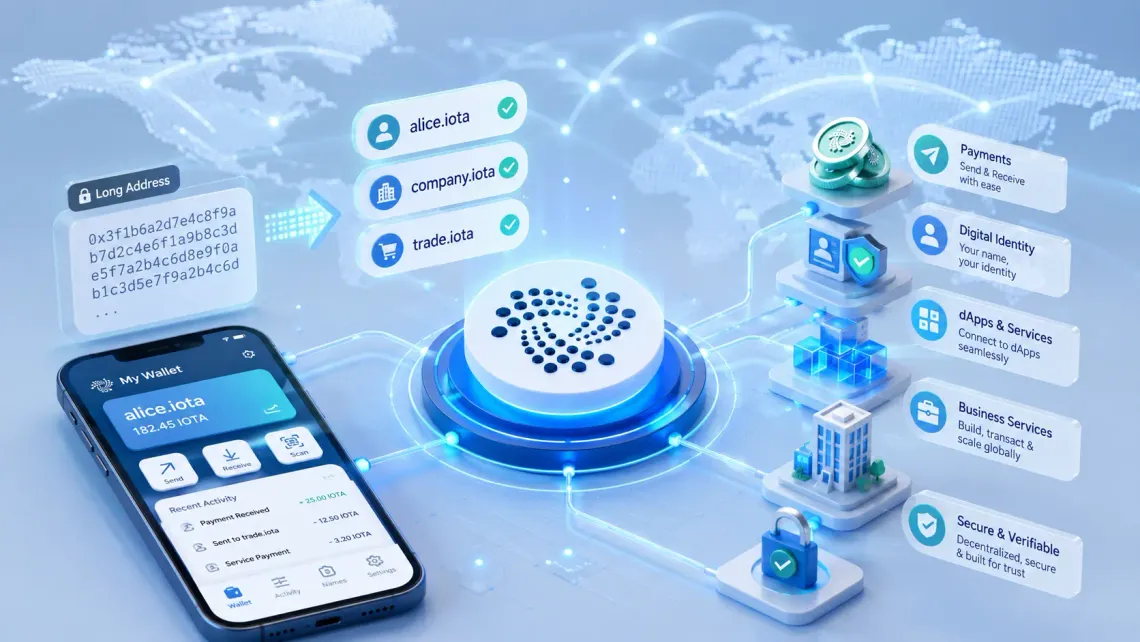
IOTA Names replaces complex blockchain addresses with readable identifiers such as name.iota. The service can simplify payments, digital identity, dApps, and interactions across the IOTA ecosystem.
Argentina is integrating electronic signatures, Verifiable Credentials and IOTA-powered decentralized identity into its national organ donation and transplantation system.
Argentina is taking a major step toward modernizing one of the country's most sensitive public services. Through Resolution 199/2026, the national transplantation authority INCUCAI has approved electronic signatures for processes managed through SINTRA, Argentina’s national information system for organ procurement and transplantation.
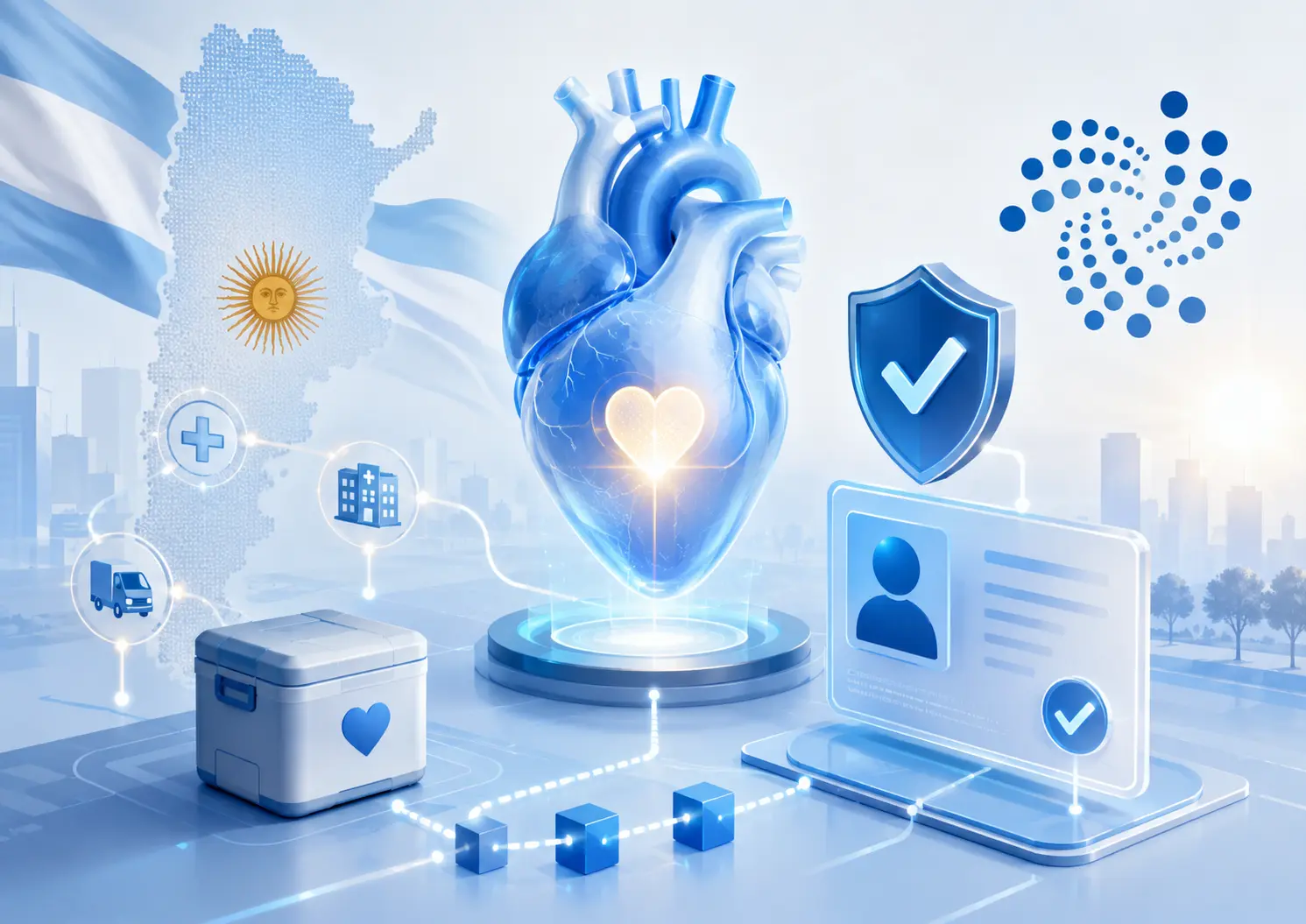
The new framework combines electronic signatures, blockchain records, Self-Sovereign Identity and Verifiable Credentials. A presentation about the project also identifies the IOTA network as a key technical component, particularly for decentralized identities, credential verification and data notarization.
This represents a significant real-world example of distributed ledger technology supporting critical public infrastructure.
Published on June 10, 2026, Resolution 199/2026 authorizes the use of electronic signatures across processes managed through SINTRA and its connected institutional systems.
Electronically signed documents, certificates, allocation records and official confirmations can now carry the same administrative and legal validity as handwritten signatures. The system is intended to cover multiple stages of transplantation, including waiting-list registration, donation, organ distribution, logistics, supervision and administrative procedures.
Argentina's government says the objective is to improve:
Instead of moving paper documents between hospitals, provincial authorities and national institutions, authorized participants will be able to complete important steps digitally.
A central component of the new infrastructure is IncucaiID, the official wallet application for patients, healthcare professionals and other authorized participants.
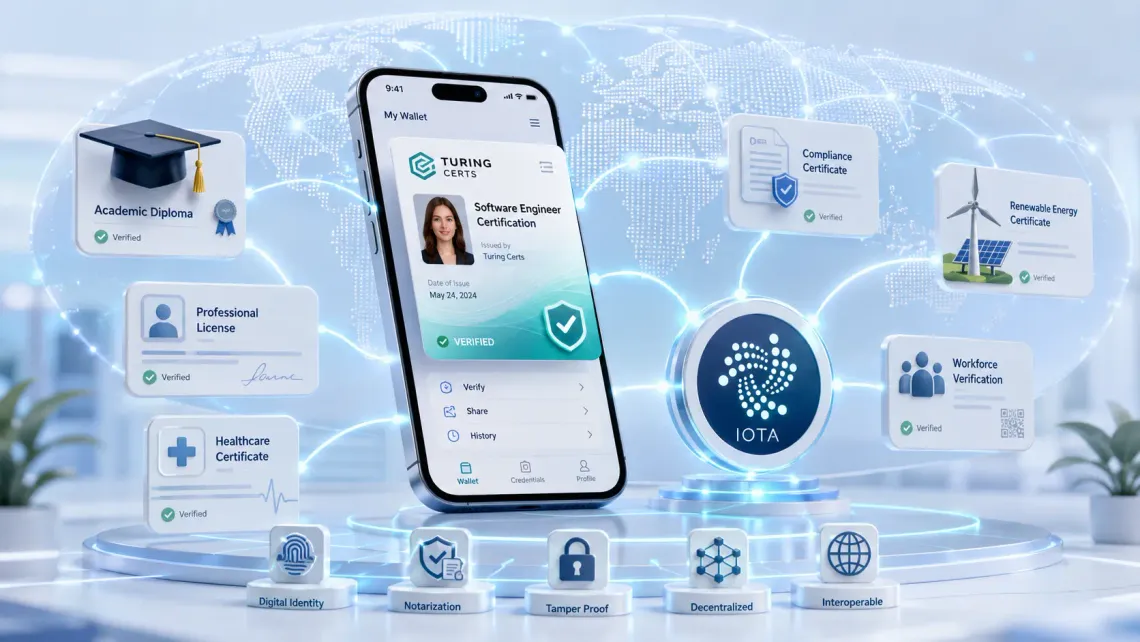
Through the app, users can receive Verifiable Credentials, confirm their identities and electronically sign documents connected to donation and transplantation procedures. Each interaction is protected through cryptographic mechanisms and can be recorded in an auditable form.
The first operational phase will focus on registration for heart and lung transplant waiting lists. The technology is then expected to expand gradually to other waiting lists, processes and documents managed through SINTRA.
A project presentation states that the IOTA network was a key component of the infrastructure developed with INCUCAI.
According to the presentation, IOTA is used to manage Decentralized Identifiers and Verifiable Credentials through a Dual DID model designed to combine interoperability, security and privacy. Its notarization capabilities also provide verifiable evidence about the integrity and movement of information throughout the process.
The official resolution does not name IOTA directly. It establishes the legal and operational framework for electronic signatures, while the project presentation provides additional information about the underlying decentralized identity technology.
IOTA Identity supports W3C standards for Decentralized Identifiers and Verifiable Credentials. It enables individuals and organizations to prove information cryptographically while maintaining control over what data they share.
A DID gives a patient, doctor or institution a cryptographically verifiable digital identity. Unlike a conventional account stored exclusively in one centralized database, the identifier can be independently authenticated.
This makes it possible to establish trusted interactions between participants who may belong to different hospitals, government agencies or regional health systems.
Verifiable Credentials function as digitally signed proofs issued by trusted organizations.
Within a transplantation system, they may be used to demonstrate that a person has been authenticated, that a professional holds a particular authorization or that an institutional action was approved by the responsible participant.
Extrimian, which worked with INCUCAI on the digital identity project, describes the use of Verifiable Credentials to improve traceability, securely validate changes and allow patients and doctors to verify status information.
The use of blockchain does not mean that confidential medical records should become publicly visible.
A privacy-preserving architecture can keep sensitive documents within protected databases while placing cryptographic proofs, hashes or non-sensitive references on the distributed ledger. Participants can then verify that information has not been altered without accessing the underlying private content.
This principle is also central to IOTA's audit-trail technology: confidential source data can remain off-chain while proofs are anchored on-chain for integrity and chronological verification.
The result is better described as auditable and tamper-evident transparency, rather than public transparency of patient information.
Organ transplantation requires coordination between patients, doctors, laboratories, hospitals, regional authorities and national institutions. Delays, fragmented records or unclear authorization histories can create serious operational risks.
Argentina's approach demonstrates how decentralized identity can strengthen an existing national platform rather than replace it. SINTRA remains the central operational system, while digital identities, credentials, signatures and blockchain proofs add a new layer of trust.
For IOTA, the project shows that its technology can extend far beyond cryptocurrency and decentralized finance. Its identity and notarization tools can support legally relevant, privacy-sensitive and socially important processes.
The most meaningful aspect is therefore not simply that blockchain is being used. It is that decentralized technology is being integrated into a system where trust, accountability and data integrity can have a direct impact on human lives.
Join our newsletter to get the latest ecosystem updates.